
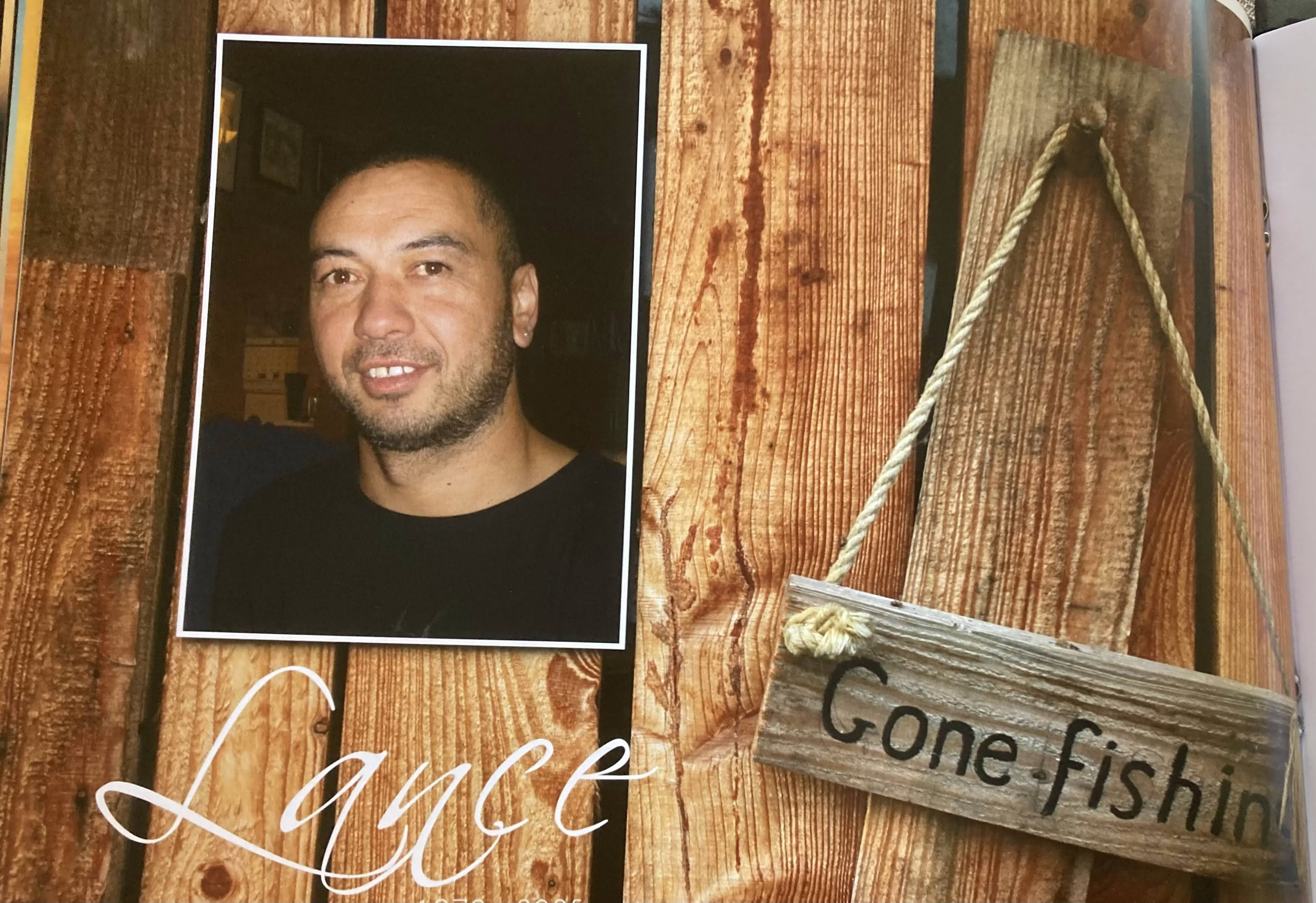
A bumpy beginning for a relationship, you’d think. But Candy and Lance Chapman’s love story spanned 14 years, many freshly painted and repaired cars, kilometres of bush walks, and countless fishing adventures. Together they created a blended family of six amazing children — a life built on love, laughter, humour, and hard work.
Then they hit a pothole no one could have imagined.
Two days after their wedding on March 18, 2023, Lance was formally diagnosed with motor neurone disease.
Not the wedding present anyone would ever want.
The Long Road to Diagnosis
The couple had known something wasn’t right long before the diagnosis. Lance, a car painter by trade, had begun having trouble with his legs. They were stiff and painful, and eventually his knees had started bowing. There were many long hours in hospital emergency departments and GP clinics, but few answers. Doctors ruled out several possibilities, including a minor stroke.
It took a long time to reach clarity — first an informal diagnosis, then months later the formal confirmation. That delay is not unusual with motor neurone disease, as early symptoms can easily be mistaken for other conditions.
“We didn’t know what to think,” Candy said. “Maybe it was all the solvents from the paint. Maybe he’d strained something working on cars. Maybe it was pest control chemicals.”
They tried everything to relieve his pain — knee braces, sprays, creams, massage, hot baths. Around the same time, the panel beating company where Lance worked closed when the owners retired. In a small community, there weren’t many options for an automotive painter, so Lance took a job with the Department of Conservation (DoC). The role involved long hours walking steep terrain — challenging work, but he loved the outdoors, especially the bush and fishing.
As his legs worsened, the job became too difficult. The family moved from Ohakune to Palmerston North so Lance could return to automotive painting with Peter Morgan Panel Beaters – they were incredible employers who became friends. Candy organised a rental property. They focused on building their future.
The Bombshell
They got married but two days later, the formal diagnosis meant everything changed.
Motor neurone disease attacks the motor neurones in the brain — the nerves that control muscle movement. Messages between the brain and muscles become disrupted. Over time, muscles weaken. People stumble, drop things. Cramps and muscle twitches are common. Speech can slur. Swallowing becomes difficult. Movement, breathing, and sometimes cognition is affected.
There is no cure.
Living Life His Way
Lance continued working — probably way longer than he should have. “His employers were amazing,” Candy said. Eventually, he could no longer drive so had to resign from his position.
At home, Lance remained determined to live life on his terms for as long as possible. He found peace in his garden. Barefoot in the soil, in touch with the earth, he nurtured roses and strawberries that flourished under his care. Cuttings seemed to grow effortlessly for him.
He still fixed cars for anyone who asked — kind, generous, always willing to help. He even managed to repaint their black Ford Falcon XR6 sedan from his wheelchair, his pride and joy.
But gradually, everything became harder.
His mobility declined, and Candy stepped fully into the role of caregiver. She stopped working so they could spend more time together and to care for him as his needs increased.
Equipment arrived through various agencies — ramps, a shower seat, a hospital bed. Then Lance received a custom electric wheelchair.
“That changed everything,” Candy said. “Suddenly he could wheel himself along the Bridle Track, across the new bridge, down to see the eels – he spent many hours watching and feeding the eels, it soothed his soul being there. We could go to the movies. Go for walks. Be a family again.”
He even accessed a four-wheel-drive wheelchair so he could still go to the beach to fish.
Back in his shed, he continued tinkering. Candy laughs remembering helping him out of his wheel chair so he could get under a car to fix something. “I was thinking, this isn’t good… but it did him good. He was so happy.
Support Arrives
Their GP eventually referred them to Arohanui Hospice.
“I didn’t know much about Hospice,” Candy admitted. “At first I thought, does this mean we’re at… that stage?” Like many people, she thought Hospice was simply where people went to die. “But that’s not all Hospice is about. I don’t think people realise how much more they offer.”
They met with nurses, a social worker, and counsellors. Candy said the most remarkable thing was that staff seemed to anticipate their needs before they even recognised them themselves. Equipment and services arrived at just the right time. The 24-hour phone support provided reassurance whenever she felt unsure.
“He had a lot of pain. As it progressed, it became really bad. I could phone and check medications dosage or additional top up medication, and I knew they would come if we couldn’t manage at home.”
Lance was admitted to Hospice for a week of symptom management, during which time Candy was able to take a step back and recover from an aggravated back injury. It was difficult for them to be apart — they had rarely spent time away from each other — but the support around Lance helped ease the pressure during an intense time.
When Lance returned home, he was more accepting of outside help with his personal care. A very proud man, he had struggled with the idea of others caring for him. Hospice helped him see that it was okay — and that made things easier for Candy too.
Her family became the other pillar of support. Her sister Jude was, and remains a strong support.
“I couldn’t have done it without her. And I couldn’t have done it without Hospice. I don’t know where we would have been without them.
The Final Months
The last six months were incredibly hard. Swallowing became difficult. Eating was a struggle. He lost his speech.
“Not being able to talk — that really destroyed him and broke my heart”
They communicated through eye contact. Candy learned to read his gaze, to understand what he needed. While he could still point, they used communication boards in the final months. The talklink tablet arrived late in the illness, but by then Lance no longer had the energy to learn how to use it without using mass amounts of energy.
“Towards the end, I was his talker. His hands. His feet,” Candy said. “I guess we became the greatest love story — the truest form of unconditional love.”
Saying Goodbye
Lance passed away at home surrounded with family, music, stories and so much love last November 2025, as he had wished.
“It was the hardest day of my life. He was just suddenly not there.”
Candy describes Hospice staff as far more than professionals.
“People think it’s just a job or an organisation. But the staff who helped, guided, and supported us became part of our family. They provided practical help. They reassured me when I doubted myself. They supported Lance in his darkest days. They offered resources for our children. They held workshops to help prepare us for the hardest time of our lives. They showed up every day in the final week when things were at their worst.
“They genuinely cared. They understood us as a family. I will be forever grateful that Hospice walked beside us during such a life-changing time.”
Aftermath
After Lance died peacefully, Candy was exhausted — physically, emotionally, completely.
“The adrenaline that carried me through just stopped. You go from way up here to down there — crash. I’m still recuperating… still working out what comes next and what our new normal is meant to look and feel like.”
But through the grief, the love story remains.
He was a Ford man.
She was a Holden girl – converted to a Ford girl.
And together, they built a life defined not by disease — but by love.
