
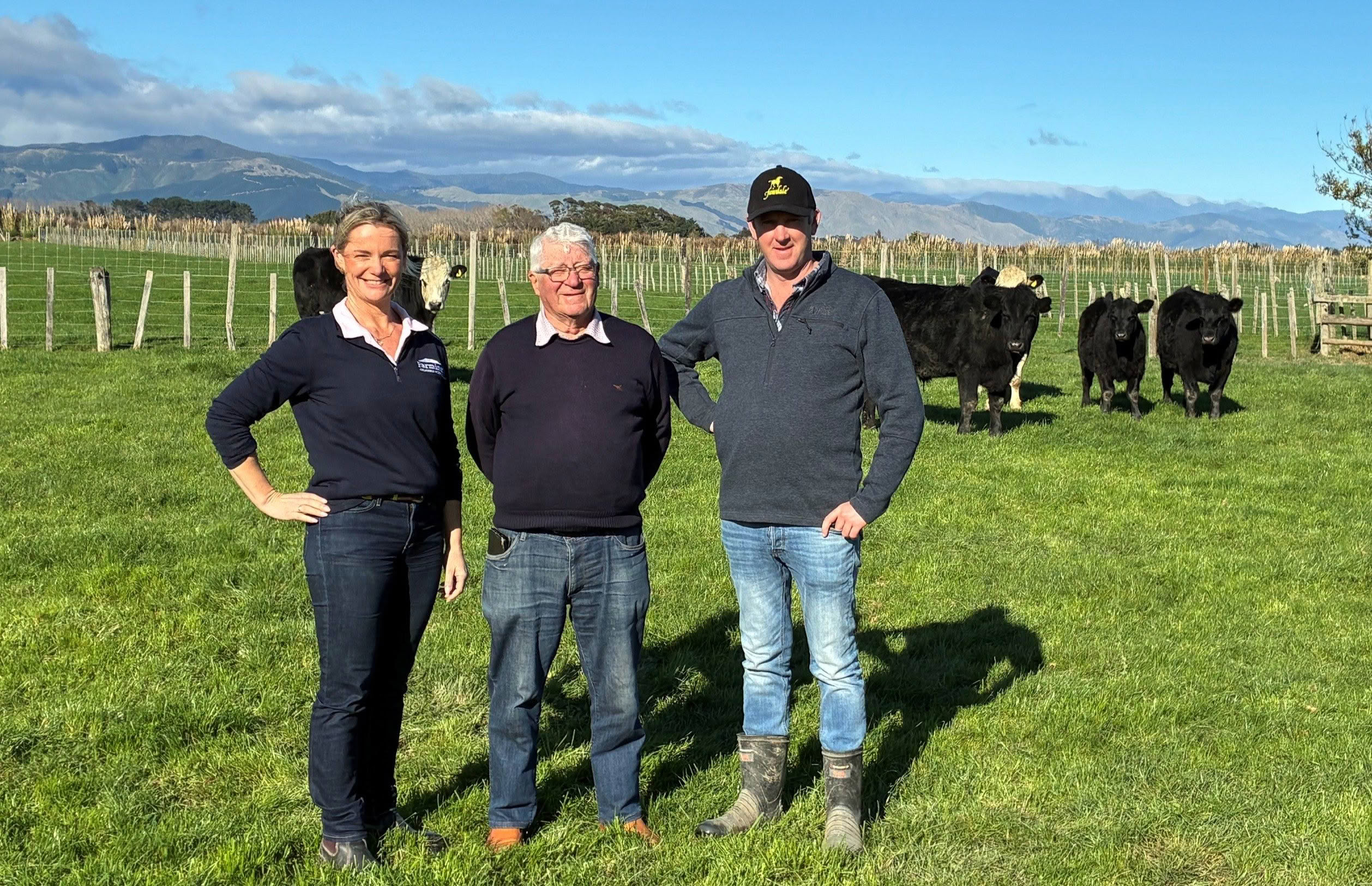
More than 30 years ago, a simple idea took root in rural communities across the Arohanui Hospice region. Today, that idea has grown into one of Arohanui Hospice’s most longstanding fundraising programmes.
For Gerald Fell, one of the founders of Farming for Hospice, the programme began with a deeply personal connection.
Gerald’s sister, Jenny Brookie, died of cancer at the age of 50 and received care from Hospice. Wanting to make a meaningful contribution that would have a lasting impact, Gerald and fellow founder Roger Clausen began exploring ways the farming community could support Hospice beyond one-off donations.
“It was a very easy sell because most families have been touched in some way by cancer and the Hospice,” Gerald says.
While similar initiatives existed elsewhere, Gerald and Roger saw an opportunity to create something that would work for local farmers and provide an ongoing source of income for Hospice.
Their vision was simple: purchase livestock, place the animals with volunteer farmers to raise and fatten, then sell them and return the profits to Hospice.
Getting the programme off the ground required a combination of determination, community goodwill and a few key champions. Former Hospice manager Mervyn Monk helped secure finance for the initial cattle purchases, drawing on connections from his previous career in banking.
A crucial step was building a network of area coordinators and volunteers who understood farming and knew their local communities. Recently retired stock agent Derek Tuck and fellow stock agent Neil Finch played pivotal roles, purchasing stock and matching animals to farmers who could raise them successfully.
“The retired stock agents knew roughly which farmers would take what kinds of stock,” Gerald recalls.
The programme faced challenges from the beginning. In its first year, a significant drop in cattle prices threatened to derail the initiative entirely.
“The first year almost scuppered the whole programme,” says Gerald.
But the team persevered, believing the model would work. Their faith was rewarded.
The programme steadily gained momentum, and as more farmers became involved, Farming for Hospice developed into a reliable and sustainable source of funding for Hospice services.
“There was always a hope that it would become a regular source of income for the Hospice,” Gerald says. “It’s a pretty painless way of making a donation. You don’t have to twist people’s arms to do it.”
Three decades later, Farming for Hospice continues to thrive, supported by generations of farming families who generously give their time, land and expertise.
Among them is Gerald’s son, Duncan Fell, who now serves as a Farming for Hospice area coordinator.
For Duncan, the role is a natural extension of both his farming life and his connection to the programme.
“It’s pretty easy to be honest,” he says. “All the farms around here run similar operations. Nobody’s said no.”
Having grown up around the programme, Duncan has seen firsthand how deeply embedded it has become in rural communities.
“I enjoy being an area coordinator. It’s not like joining any other volunteer group. As a farmer, being a Farming for Hospice area coordinator means you’re staying involved in your community with people you know.”
That sense of community remains one of the programme’s greatest strengths. We’re proud to have a number of multi-generational area coordinators like Duncan and Gerald who have been with the programme since it began.
For Gerald, much of the success comes down to relationships and shared experiences.
“It’s always been about who you know,” he says.
Many of the farmers involved have their own connections to Hospice through family members, friends or neighbours. They understand the difference Hospice care makes and appreciate having a way to contribute that fits naturally within their farming operations.
“It’s a contribution you almost don’t realise you’re making,” Gerald says. “One of the keys to success is you don’t have to put your hand in your pocket.”
Instead, farmers donate their grazing, care and expertise, allowing the animals to be raised before sale. Behind the scenes, the Farming for Hospice team helps make participation straightforward by organising the purchase, tagging and transport of stock.
The result is a programme that continues to deliver significant support for Arohanui Hospice while remaining accessible and rewarding for those involved.
Looking back, Gerald takes immense pride in seeing the initiative continue to flourish more than 30 years after it began.
“It’s nice to see the system we set up still doing well today,” he says.
“People are proud to be part of the programme.”
He is quick to acknowledge the many volunteers, coordinators, farmers and supporters who have contributed to its success over the years.
“It is a great credit to the whole team who helped set it up that the programme is still running well 30 years later.”
Through the commitment of people like Gerald, Duncan, our 16 area coordinator volunteers, and the hundreds of farming families who have supported the cause over the decades, Farming for Hospice has become more than a fundraising programme. It is a legacy of generosity, community spirit and care, helping ensure Arohanui Hospice can continue supporting local families when they need it most.
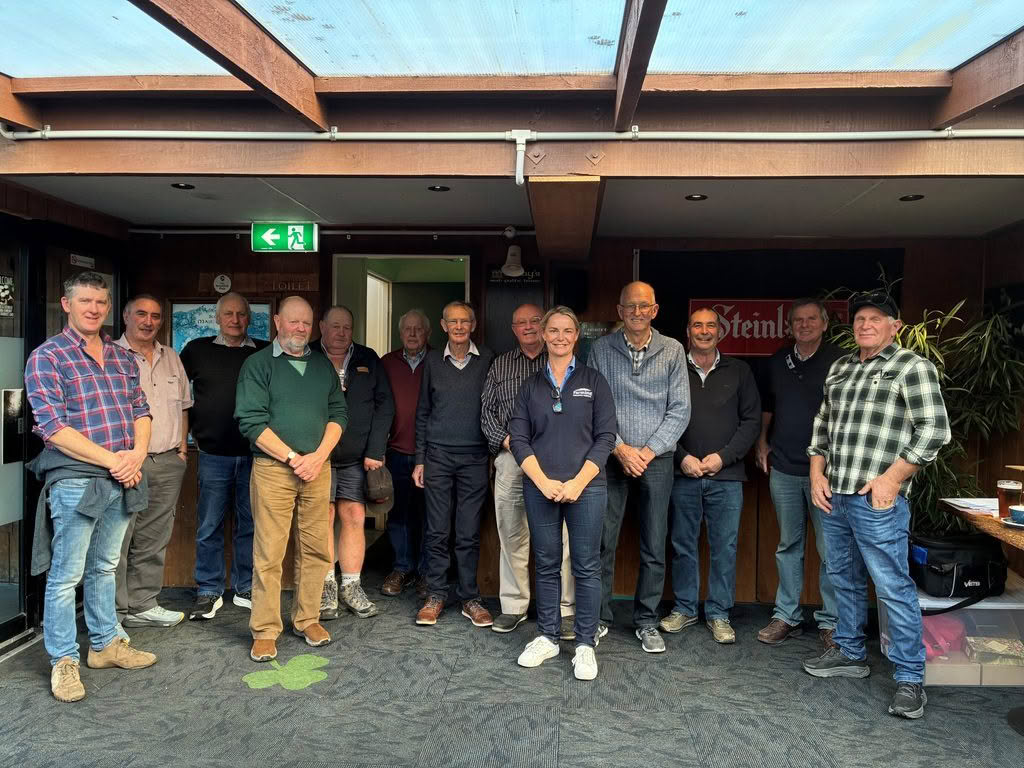
(Missing – Geoff Williams, Ryan Andrew, George Shannon, Jo Gallen, Phill Robson).
